

Projector Power
& Shutdown Repair.
Dead units, flashing red lights, dirty power failures, and random thermal shutdowns. We specialise in component-level micro-soldering to revive critical power supplies, Xenon ballasts, and logic boards.
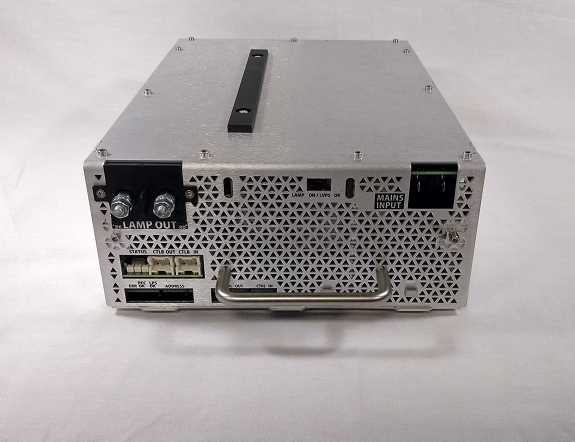
The Physics of Power Failure
Projectors manage extreme environments. They convert mains AC power into precise low-voltage logic, while simultaneously generating high-voltage ignition strikes and immense thermal output. When a projector "dies", it is usually a catastrophic component failure or a self-preservation shutdown.
SMPS Bridge Failure (Dead)
If there are absolutely no standby lights, the primary Switch Mode Power Supply (SMPS) has failed. Ageing electrolytic capacitors dry out, causing voltage ripple that eventually destroys the primary switching ICs and bridge rectifiers.
"Dirty Power" & PFC Blowouts
Running projectors on cheap venue generators or unstable grids causes severe harmonic distortion ("dirty power"). This instantly destroys the Active Power Factor Correction (PFC) circuit, shattering MOSFETs and blowing the main ceramic fuses.
Thermal Shutdown Loop
The projector runs for 5-15 minutes, then abruptly powers down with fans spinning at maximum speed. Internal thermistors have detected dangerous heat levels due to blocked airflow or a dead fan. The logic board cuts the lamp to prevent fire.
Mainboard 5V Short
If the standby light is on, but pressing power causes an immediate reset (or nothing happens), the main logic board is failing. We often trace this to a dead DC-DC buck converter creating a short circuit on the critical 3.3V or 5V logic rails.
Lethal Voltage Warning: Never open a projector to inspect the power supply. The large primary filter capacitors within projector power supplies can hold a lethal DC charge (over 350V) long after the unit is unplugged from the mains. High-brightness ballasts also generate extreme ignition voltages. Only qualified electronic engineers should attempt these repairs.
Light Source Power Topologies
Different light engines require vastly different power delivery methods. We have the schematics and oscilloscope diagnostics to repair all high-end power architectures at the component level.
AC UHP Ballasts (Single, Dual, Quad)
Mercury Arc Systems
Ultra-High Performance (UHP) mercury lamps require a massive initial voltage spike (up to 25kV) to strike the arc, then settle into a controlled AC waveform. A "clicking" noise without light indicates ignition failure.
In high-brightness venue projectors (e.g., Panasonic PT-DZ21K, Christie M-Series), dual or quad-lamp arrays rely on complex synchronised ballast boards. A failure in one ballast can disrupt the communication bus, triggering a system-wide safety shutdown. We rebuild these ballasts, replacing blown ignition coils and switching transistors.
Xenon Lamp Power Supplies (LPS)
D-Cinema & Premium Staging
Digital Cinema projectors (Barco DP4K, Christie Solaria) utilise Xenon short-arc lamps for perfect colour reproduction. Unlike UHP, Xenon runs on extreme high DC current (often exceeding 100 Amps).
The Lamp Power Supply (LPS) and separate high-voltage Igniter module must flawlessly manage this current. Component degradation here leads to severe image flickering or 'Ballast Comm Errors'. We perform heavy-duty component-level rebuilds on these massive power blocks, saving cinemas thousands on OEM replacements.
Solid-State Constant Current Drivers
Laser Phosphor & Pure RGB
Laser diodes require incredibly stable, constant-current DC power. Unlike bulbs, lasers are highly sensitive to power delivery; even minor ripple voltages from a failing driver board will cause visible on-screen flickering or trigger an immediate "Laser Error" interlock.
Furthermore, laser drivers are tightly integrated with the thermal management logic. If a driver board overheats, it will dynamically throttle (dim) the laser. We repair the multi-channel laser driver boards found in modern ALPD and RGB pure laser systems down to the component level.
Primary Logic & Smart Power
System Control Boards
Modern projectors are essentially powerful computers. The primary power supply must generate perfectly clean 3.3V, 5V, and 12V rails to power the mainboard processors, Android TV chipsets, and HDMI formatter ICs.
When power surges bypass the main fuse, they often wipe out the DC-DC converters on the logic board itself. This causes "boot loops" (stuck on the logo screen) or completely unresponsive units. We trace these micro-shorts and replace the burnt surface-mount ICs to revive the "brains" of the projector.
Frequently Asked Questions
My projector was running on a generator and died. Can it be fixed?
Yes. This is a classic 'dirty power' failure. Cheap generators cause severe harmonic distortion and voltage spikes. This instantly destroys the Active PFC (Power Factor Correction) circuit and MOSFETs inside the projector's power supply. We can rebuild this circuit at the component level.
Why does my projector click a few times and then show a red light?
The clicking sound is the high-voltage ballast attempting to strike the lamp arc (pushing up to 25,000 volts). If it fails after 3-5 attempts, the system throws a lamp error. This can be a blown bulb, but often the igniter coil on the ballast itself has burnt out.
My quad-lamp projector shuts down completely if one lamp fails. Why?
In dual or quad-lamp UHP arrays (like the Panasonic PT-DZ21K or Christie Roadster), the ballasts are highly synchronised via a dedicated communication bus. If one ballast board suffers a catastrophic short, the mainboard detects a severe voltage drop and initiates an immediate safety shutdown to protect the other light engines.
Don't Throw It Away.
A dead power supply does not mean your projector is dead. By repairing the board at the component level, we can revive high-end home cinema and professional AV units for a fraction of the cost of an OEM module replacement.